

When discussing with my own mother how she coped with the menopause she told me that she doesn’t really remember any major symptoms and so from a genetic point of view I thought it would be likely that I would breeze through this stage as well.
This was until I found my memory starting to let me down on a more regular basis a couple of years ago (when I turned 45) and I found that I was becoming particularly anxious/impatient around the time of my period.
Initially, I put it down to the STRESS of balancing life at home and at work…
- I run my own business as a Nutritional Therapist which I love.
- I also manage the marketing and administration for two companies: Life Practice UK Ltd & The NLP Coaching Company plus I was in the process of setting up a new Online Educational Platform for our training courses (as I was the most techy out me and my partner who also works alongside me).
- I was volunteering for a local Community Garden once a week teaching adults with learning difficulties how to grow, prep and cook healthy food.
- I was looking after my two teenage children..and at this point my teenage daughter was going through adolescent melt-downs on a regular basis (due to hormones, boys and A-levels) which was emotionally and mentally exhausting to manage as a parent.
- I also was dealing with some concerns for my own parents health issues.
So I took a step back and put a plan of action together by starting with explaining to my family that I was having some symptoms with my memory and for them to be a little more understanding when I had done things like forgotten to buy the ingredients for the Food Technology class that my son had that day or forgotten to ring someone back at work that had left me a message. I started by writing everything down, some of which were:
- Weekly shopping lists – this was pinned up in a communal area of the kitchen for everyone in the family to write what they required and then I would order an internet shop on the same day each week to be delivered. This was also a HUGE time saver and taught all the family to take some responsibility for the things that they needed rather than assume “Mum” would do it all. You can imagine the type of things my children would put on there in the “hope” that it might be bought so it did create a smile or two.
- I created household chores list for all the family to dedicate some of their own time to cleaning the house each week. My two children were growing up fast and I was starting to realise that if I didn’t teach them to pick up after themselves now this would carry out into adulthood. Plus the threat of pocket money would not be given until it was done did help here.
- Menu planning for the week and batch cooking in order to always have something available to eat that was healthy and quick to prepare – another time saver!
- The names of my children’s teachers (and emails) – they have so many subject teachers now and I was over going to parents evening and talking about my daughter’s grasp of geography to find it was actually the Spanish teacher!
- A “to do” list of each area of my business that I could review each day and tick off as it was done
This system spread the responsibility amongst my family and everybody pulled their weight accordingly. I even started to teach my children some quick dishes to put together themselves if they wanted to prepare their own supper occasionally when I was caught at work late. This has been a godsend as my daughter who is lactose intolerance and a vegetarian and DID end up making it to university can now cook for herself and it would appear is in the minority of healthy eaters in her halls. Parenting win!!
The memory become A LOT better but I still needed to educate myself further and decided to start researching more in depth about the menopause so that I am could be in tip top condition through this phase of my life.
(By the way, the doctor had not even suggested that peri-menopause might be the issue but told me not to stress so much and did a General Practitioner Assessment of Cognition (GPCOG) screening).
So what have I learnt….
Firstly, the menopause is actually the term used for the year after your periods have officially stopped and your eggs have stopped being produced. The time prior to that is known as the Peri-menopause. The Peri-menopause begins several years before menopause and it is the time when your ovaries start to gradually begin to stop making less estrogen. Progesterone levels also tend to decline quicker than estrogen levels so this can also cause a range of symptoms. So during this time the estrogen levels can fluctuate from high to low and anywhere in between and this means that we can suffer with a range of symptoms depending on where those levels are:
High estrogen symptoms:
- weight around hips and belly area
- migraines
- fluid retention
- pms
- pain in the abdomen
- heaviness in the area between the uterus and anus
- mood swings/ impatience/anxiety <—– there it is, this was me
- breast tenderness
Low estrogen symptoms:
- Wrinkles from skin dryness
- painful intercourse
- vaginal dryness
- memory loss <—– and this one too
- poor sleep
- night sweats
- hot flushes
What age does the peri-menopause start and how long does it last?
It usually starts in a woman’s 40s, but can start in her 30s or even earlier. Perimenopause lasts up until menopause, the point when the ovaries stop releasing eggs so this can vary for each individual.
What other symptoms can you have?
- Fatigue
- irregular or heavy/painful periods
- you may experience spotting
- brain fog
- poor sleep
- weight gain
- hot flushes/night sweats
- depression
- hair loss
- joint pain
- low libido
What are the other things can increase the symptoms of Peri-menopause
Apart from the above, in terms of your age, there are many other things to take into consideration when trying to establish what might also be a factor for your symptoms, as by knowing this you can make a plan of action on the areas to work on and support.
Stress
Stress can be a major disruptor to your peri-menopause journey. This was definitely a factor in my case. Too much to do and so little time.
When our body goes into stress mode the brain responds by sending a message to the endocrine glands to release the hormones required to support the body to “fight or flee”. Your body’s hormones that are released are cortisol, adrenaline and nor-adrenaline and these all create a range of reactions to support you through the stress episode. Your pupils dilate, breathing increases, blood pressure increases to push your blood through the arteries quicker,your heart beats faster in order to carry the blood to the lungs to be oxygenated and then to the muscles to give you strength, your digestion takes a rest so as to conserve energy for the “fighting and the fleeing” and your blood sugar levels increase as your cells release glucose and liver releases glycogen to feed the body for this reaction.
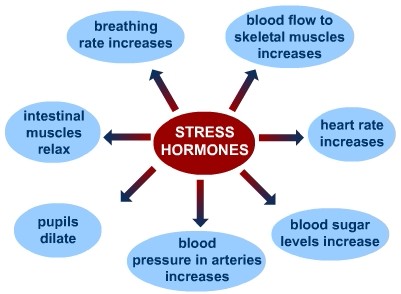
All this activity takes place within nano seconds!! Isn’t the body incredible???
The problem is modern day living means that we can experience stress many times a day every day and unlike during paleolithic times when the caveman would be able to fight the wild beast for food or flee from it and then have a nice rest thereafter, we do not have this luxury and neither does our body so it therefore starts to become imbalanced. Why? Well, because the endocrine glands (adrenals in particular) start to tire and wear out and become unreliable in terms of their output of the hormones so without the hormones the body cannot adapt to it’s environment.
Cortisol can not only have an impact on your energy, mood, brain function and metabolism, but it can also suppress your thyroid and sex hormones, making your symptoms even worse.
Thyroid
Our thyroid is also responsible for the output of hormones that have a specific function in the body. The thyroid gland produces hormones that regulate the body’s metabolic rate as well as heart and digestive function, muscle control, brain development, mood and bone maintenance.
Stress, a poor diet, gut health or environmental toxins can take a toll on your thyroid hormones. Underactive thyroid symptoms include:
- being sensitive to cold
- weight gain
- slow movements and thoughts
- muscle aches and weakness
- muscle cramps
- low mood
Diet
Hormones need lots of different nutrients from your diet to work properly. This means a healthy balance of proteins, carbohydrates (not simple sugary ones though), healthy fats and a rainbow of vegetables – the more colour the better. Too many carbohydrates or stress creates a blood sugar roller coaster, increasing your insulin and messing with your other hormones.
Let me explain what I mean by blood sugar imbalance…
When you eat food it is broken down by your digestive system and the nutrients (energy/glucose) are released into the bloodstream in order to grow, repair, renew, re-generate, reproduce and maintain the body’s cells, systems and organs. The pancreas controls the release of the hormone insulin into the bloodstream in order to maintain the blood sugar (glucose in the blood) balance to prevent you from going too high or too low. By eating a healthy balance of the right carbohydrates, healthy fats and protein we can maintain a good balance of blood sugar (energy) that keeps us going throughout the day because our energy levels are consistent. All food groups have a different energy values (known as glycaemic load) and by eating a higher ratio of starchy and/or sugary carbohydrates this can upset the balance.
When these high glycaemic load foods such as sugary carbohydrates are eaten repeatedly, the body begins to over react. The pancreas produces more insulin than is needed, causing blood sugar levels sky rocket for about an hour and then crash to low levels (this is the point when cravings happen). This can wear out the cells involved in this process and eventually the pancreas can stop release the insulin hormone – this is what Type 2 Diabetes is.
Prior to the Type 2 diabetes point, you can start to suffer many other tell tale symptoms, including fatigue, excessive, thirst, light-headedness, headache, mental dullness, emotional instability, depression.
What can I do?
If you have tried dieting and you are over forty you may find that the weight loss does not happen as easy as it did when you were younger. This is because the body thinks it is deprived and is going into starvation mode and will respond as though it the body is under attack from stress. So if you remember that cortisol is released as part of the stress response, the body also shuts down digestion so food is stored as fat (for energy), mainly around the belly. Metabolism also slows down to keep energy reserves in check.
We know that balancing blood sugar is a priority as it helps to sustain energy levels, balance moods, improve cognitive function and lose excess weight.
- Cut out processed foods, and carbs that contain simple sugars.
- Combine at each meal protein with healthy carbs and healthy fats, that way you blood sugar levels are more likely to stay in check.
- “Phyto” means plant by including phytoestrogens in the diet (flaxseeds and fermented soy) this can help to balance oestrogen levels and reduce incidences of hot flushes and night sweats.
- Increase phytonutrients like kale and spinach, wholegrains, nuts, beans, seeds and reduce stimulants like caffeine or alcohol which can affect blood sugar balance.
This will also support support thyroid and cellular health which is very important.
Environmental Toxins
There are toxins all around us from environmental pollution from cars, industrial factories, multi-fuel burners and apart from moving house and doing our bit for the environment this is something we cannot always change in our lives. There are also a huge number of toxins in our homes particularly what we choose to use to clean our homes with and put on our skin. Many beauty products contain Endocrine Disrupting Chemicals(EDC’s) which can mimic or alter hormones, especially oestrogen. They can also impair mitochondrial function (energy) within our cells.
What can I do?
- Minimise exposure to EDC’s (Endocrine Disrupting Chemicals)
- eat organic where possible to avoid pesticide exposure
- Swap BPA plastics to glass or stainless steel.
- Avoid products containing phthalates (eg synthetic fragrance in personal and household products).
- Choose products containing no parabens as they are known to disrupt hormone function.
- Also no artificial colours, propylene glycol (a form of antifreeze used in beauty and food products), no triethanolamine (toxic to the immune system and respiratory systems and no EDTA – made from ethylenediamine, formaldehyde – a known carcinogen.
Medications
Certain medications can disrupt your hormones, including the Birth Control Pill, HRT, steroids and anti depressants
What can I take?
- Hormone Replacement Treatment (HRT) can be offered by a GP and for some people this can be a life saver.
- There is also bio-identical hormone replacement therapy.
- Other women can cope naturally by making sure that they are following the right diet, lifestyle, managing their stress levels
- Supplements – I recommend that these are administered by a Nutritional Therapist so that they can design a protocol that is individual for you. Supplements that are sold to the mass market at cheap prices and tend to contain fillers, additives and very little of the actual supplement that you may require. Those types of products tend to be a one size fits all and do not always work for individual because they are individual in their medical history, genetics, diet, lifestyle choices etc etc. You would be better off finding a BANT Registered Nutritional Therapist and having a consultation and following a personalised programme that they can designed specifically for you.
- Testing – Get appropriate tests carried out – whether through your doctor or privately, tests can be very helpful in identifying the root cause of any imbalance. Tests can be done for checking thyroid, adrenals, sex hormones, blood sugar, gut health and key nutrients.
Liver overload
The Liver is the organ that clears the toxins from your body so if your liver is struggling to process and eliminate toxins due to a regular overload of alcohol, caffeine or drugs, then hormone metabolism can also be affected. Excessive drinking amongst middle aged women has statistically increased in recent years so this is really something to take seriously as a factor that could be affecting your hormone levels.
What can I do?
- cruciferous vegetables (cauliflower, cabbage, bok choy, brocolli, Brussels sprouts, cress) help to support your liver detoxification pathways and oestrogen clearance.
- Reduce alcohol intake
Gut health
I have left the Gut Health until last as it is probably one of the most paramount in anything that you can do to support your health through to the menopause. The Gastro-intestinal tract is know as the second brain and a suboptimal gut can mean that certain hormones might not be metabolised or converted properly.
The right balance between good bacteria and bad bacteria in the gut is key to keeping the gut healthy. Bad bacteria, parasites or an overgrowth of candida can outnumber the friendly bacteria that line the GI tract and when this happens this can cause inflammation. Inflammation may affect other areas of the body that may be susceptible as it can be carried through the blood stream.
As vaginal dryness can be a symptom of low estrogen levels this can increase susceptibility to infection. As the acidity of the vagina reduces, the usual protective vaginal environment loses its ability to fight vaginal infections such as Candida Albicans (thrush) and other micro-organisms. When candida grows out of control, it can also release part of its fungal wall, which induces inflammation. An overgrowth of yeast in the intestines can lead to a wide variety of chronic digestive problems, such as bloating, diarrhoea, chronic stomach inflammation, and heartburn. It can also cause symptoms that include fatigue, headaches, muscle aches, and chronic flu-like symptoms.
Sensitivity to certain foods can also upset the gut and cause bloating, excessive wind or digestive disorders like IBS
What you can do?
- Hydration helps to keep the bowels moving, while reducing alcohol and caffeine can support the liver and gut.
- Include some probiotic foods (live yoghurt, sauerkraut, kefir, kombucha) can help to support the microbiome (your good bugs!) and digestive function and optimum absorption.
- If you suspect a food intolerance this can be tested for by a Nutritional Therapist
Lifestyle
Lifestyle choices are not just what you eat but how you live, whether you exercise regularly, socialise with friends or relax, follow a hobby. These things can all have support your physical and mental health during the Peri-menopause.
What you can do?
- Activity – increasing exercise helps to reduce sedentary behaviour and increase metabolism. Avoiding over-exercising is as important to not increase stress on the body.
5 ways to increase exercise
- Take the stairs
- Do your own chores/cleaning the house
- Resistence training – to increase muscle mass (you lose muscle as you age)
- Swimming
- Mind/body balance exercise – yoga, tai chi, pilates, meditation
- De-stress – managing stress through mindfulness or other relaxation techniques such as meditation can have a huge impact on symptoms.
- Sleep – Improving sleep quality through dietary changes, stress management techniques and sleep hygiene routines can be very helpful.
So now you know the plethora of things that can create the symptoms of the Peri-menopause and how you can improve things why not give them a try and let me know how you get on.